Usage
General
After installation PETdeface can be run from as follows:
petdeface /inputfolder --output_dir /outputfolder
Given a PET BIDS dataset like below:
tree /inputfolder
.
├── README
├── dataset_description.json
└── sub-PS50
    ├── anat
    │   ├── sub-PS50_T1w.json
    │   └── sub-PS50_T1w.nii
    ├── ses-baseline
    │   └── pet
    │       ├── sub-PS50_ses-baseline_pet.json
    │       └── sub-PS50_ses-baseline_pet.nii.gz
    └── ses-blocked
        └── pet
            ├── sub-PS50_ses-blocked_pet.json
            └── sub-PS50_ses-blocked_pet.nii.gz

6 directories, 8 files
The following output will be produced:
tree /outputfolder
/outputfolder
├── README
├── dataset_description.json
├── derivatives
│   └── petdeface
│       └── sub-PS50
│           ├── anat
│           │   ├── sub-PS50_T1w_defacemask.nii
│           │   ├── sub-PS50_desc-faceafter_T1w.png
│           │   └── sub-PS50_desc-facebefore_T1w.png
│           ├── ses-baseline
│           │   └── pet
│           │       └── sub-PS50_ses-baseline_desc-pet2anat_pet.lta
│           └── ses-blocked
│               └── pet
│                   └── sub-PS50_ses-blocked_desc-pet2anat_pet.lta
└── sub-PS50
    ├── anat
    │   ├── sub-PS50_T1w.json
    │   └── sub-PS50_T1w.nii
    ├── ses-baseline
    │   └── pet
    │       ├── sub-PS50_ses-baseline_pet.json
    │       └── sub-PS50_ses-baseline_pet.nii.gz
    └── ses-blocked
        └── pet
            ├── sub-PS50_ses-blocked_pet.json
            └── sub-PS50_ses-blocked_pet.nii.gz

14 directories, 13 files
Previously faced files are replaced with defaced images while the registration, mask files, and before and after photos are stored in the derivatives folder.
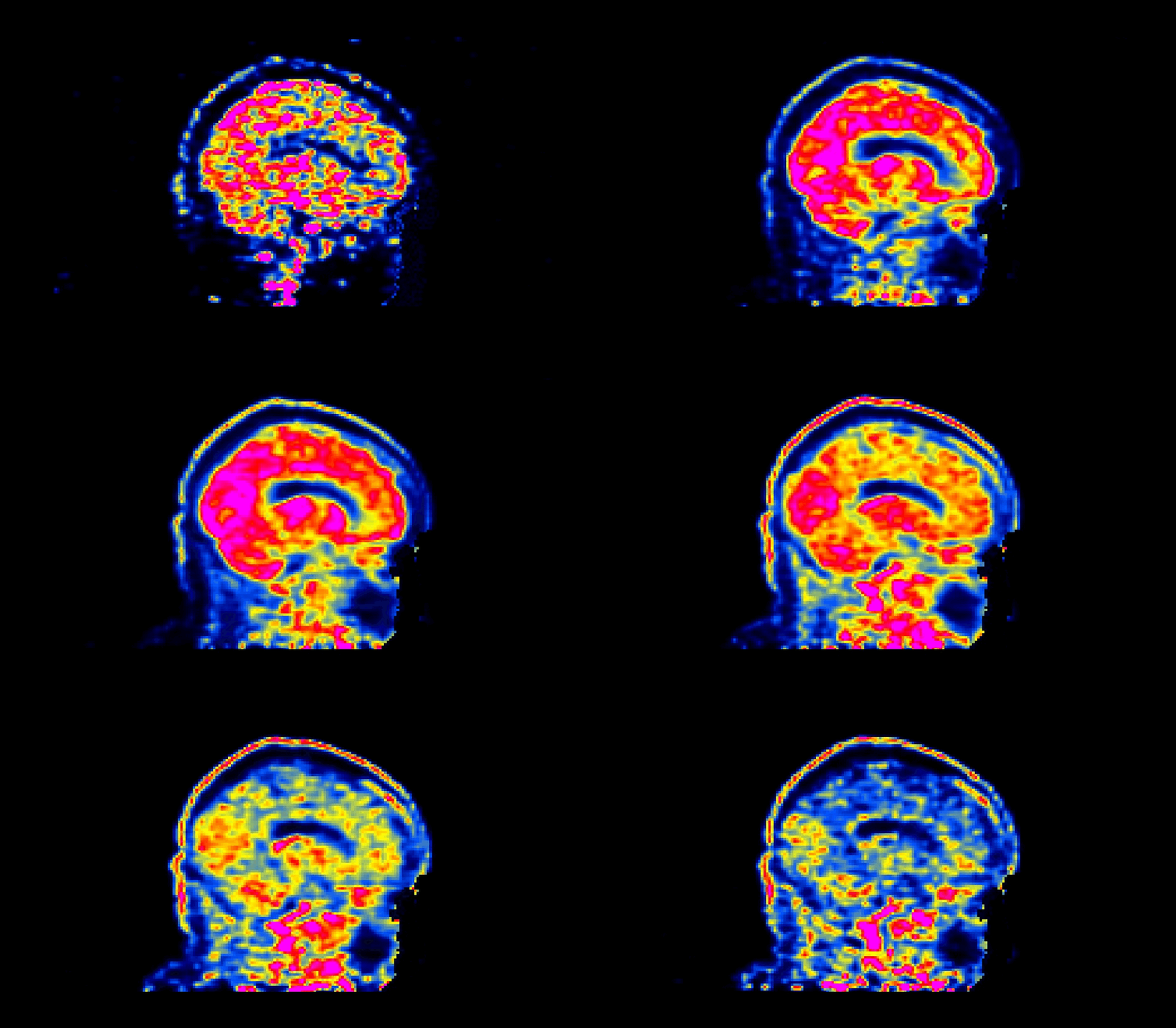
When viewed, a succesfully defaced PET image will have varying intensities in the face region, as shown below:
The number of processors made available to PETdeface can be set by the –n_procs flag e.g.:
petdeface /inputfolder --output_dir /outputfolder --n_procs 4
Additional options can be found in the help menu:
petdeface -h
usage: petdeface [-h] [--output_dir OUTPUT_DIR] [--anat_only] [--subject SUBJECT] [--session SESSION] [--docker] [--n_procs N_PROCS] [--skip_bids_validator] [--version]
             [--placement PLACEMENT] [--remove_existing]
             input_dir

PetDeface

positional arguments:
input_dir             The directory with the input dataset

options:
-h, --help            show this help message and exit
--output_dir OUTPUT_DIR, -o OUTPUT_DIR
                        The directory where the output files should be stored
--anat_only, -a       Only deface anatomical images
--subject SUBJECT, -s SUBJECT
                        The label of the subject to be processed.
--session SESSION, -ses SESSION
                        The label of the session to be processed.
--docker, -d          Run in docker container
--n_procs N_PROCS     Number of processors to use when running the workflow
--skip_bids_validator
--version, -v         show program's version number and exit
--placement PLACEMENT, -p PLACEMENT
                        Where to place the defaced images. Options are 'adjacent': next to the input_dir (default) in a folder appended with _defaced'inplace': defaces the dataset in place,
                        e.g. replaces faced PET and T1w images w/ defaced at input_dir'derivatives': does all of the defacing within the derivatives folder in input_dir.
--remove_existing, -r
                        Remove existing output files in output_dir.
--excludesubject EXCLUDESUBJECT [EXCLUDESUBJECT ...]
                    Exclude a subject(s) from the defacing workflow. e.g. --excludesubject sub-01 sub-02
Docker Based
PETdeface can be run in a docker container using the –docker flag:
petdeface /inputfolder --output_dir /outputfolder --docker
Alternatively, if one is unable to install PETdeface from source or PIP, but can execute running a docker image they can run this pipeline usin the syntax below:
docker run --user=$UID:$GID -a stderr -a stdout --rm \
-v /Data/faced_pet_data/:/input \
-v /Data/defaced_pet_data/:/output \
-v /home/user/freesurfer/license.txt:/opt/freesurfer/license.txt \
--platform linux/amd64 \
petdeface:latest  /input \
--output_dir /output \
--n_procs 16 \
--skip_bids_validator \
--placement adjacent \
--user=$UID:$GID \
system_platform=Linux
One needs to create 3 bind mounts to the docker container when running PETdeface directly from docker:
/input needs to mounted to the input BIDS dataset on the host machine
/output needs to be mounted to the output directory on the host machine
/opt/freesurfer/license.txt needs to be mounted to the freesurfer license file on the host machine
If one is running PETdeface on a linux machine and desires non-root execution of the container,
the --user flag needs to be set to the UID and GID of the user running the container.
Of course all of the above is done automatically when running PETdeface using the --docker flag.
Singularity Based
PETdeface can also be run using singularity, however one will need access to the internet/dockerhub as it relies on being able to retrieve the docker image from dockerhub. The syntax is as follows:
petdeface /inputfolder --output_dir /outputfolder --singularity
Running petdeface in singularity will generate then execute a singularity command that will pull the docker image from dockerhub and run the pipeline.
singularity exec -e –bind license.txt:/opt/freesurfer/license.txt docker://openneuropet/petdeface:latest petdeface /inputfolder –output_dir /outputfolder –n_procs 2 –placement adjacent
PETdeface will do it’s best to locate a valid FreeSurfer license file on the host machine and bind it to the container by checking FREESURFER_HOME and FREESURFER_LICENSE environment variables. If you receive an error message relating to the FreeSurfer license file, try setting and exporting the FREESURFER_LICENSE environment variable to the location of the FreeSurfer license file on the host machine.